
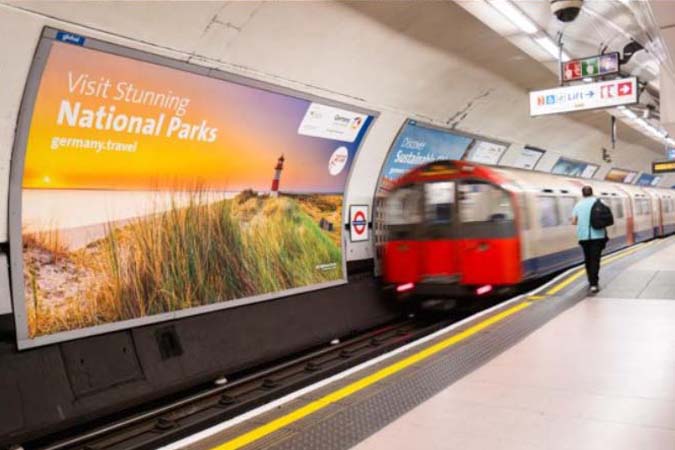
For tourism boards around the world, developing effective tourism marketing strategies has never been more important. Competition between destinations is increasing, digital channels are becoming more expensive, and travellers are exposed to more choice than ever before.
At the same time, the United Kingdom remains one of the most valuable outbound tourism markets globally. Millions of UK residents travel abroad each year, creating a major opportunity for destinations looking to increase international visitors.
Research from ABTA indicates that the appetite for international travel remains strong, even during periods of economic uncertainty. Many travellers prioritise holidays and experiences, making travel a resilient sector.
The challenge is clear: How do tourism boards cut through the noise and inspire travellers to choose their destination?
One of the most effective, yet often underutilised channels is Out of Home (OOH) advertising.
From high-impact billboards in major cities to immersive digital screens in airports and rail stations, OOH advertising enables destinations to reach travellers at key moments of influence. It plays a crucial role in destination marketing, building awareness, inspiring travel, and driving demand.
This guide explores how tourism boards can use OOH advertising as part of a wider international tourism marketing strategy to attract UK visitors and increase global travel demand.
The Challenge: How Tourism Boards Attract International Visitors
Before exploring solutions, it’s important to understand the challenges facing tourism organisations today.
Increasing Competition Between Destinations
Countries, regions and cities are all competing for the same travellers. Emerging destinations are investing heavily in destination marketing campaigns, making it harder to stand out.
Rising Digital Advertising Costs
Platforms like search and social media have become saturated. Costs per click and impression continue to rise, reducing efficiency and limiting reach — particularly for awareness campaigns.
Shorter Attention Spans
Travellers are exposed to thousands of marketing messages daily. Capturing attention requires bold, high-impact formats that break through clutter.
The Need for Early-Stage Influence
Travel decisions often begin with inspiration — long before a user searches online. Tourism boards must influence travellers early in their journey to remain competitive.
What is Out of Home Advertising in Tourism Marketing?
Out of Home advertising refers to any advertising that reaches consumers outside of their homes. This includes:
- Billboards
- Digital Out of Home (DOOH) screens
- Transport advertising (rail, underground, buses)
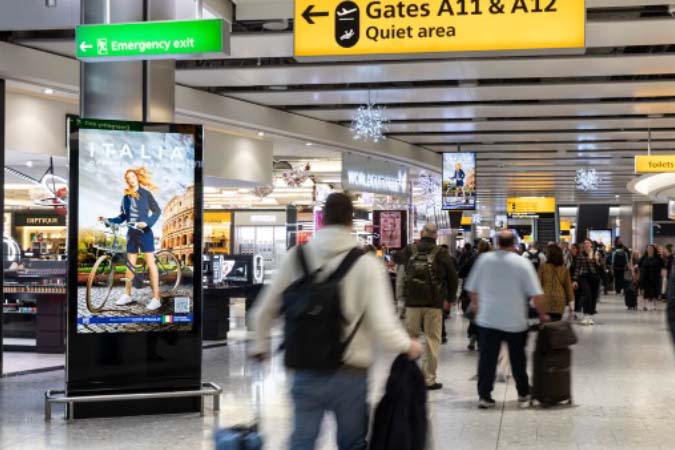
- Airport advertising
- Retail and city centre placements
In the context of travel marketing strategy, OOH plays a critical role at the top of the funnel — driving awareness, inspiration, and consideration.
Unlike digital ads that compete for attention on a screen, OOH exists in the real world, offering:
- Large-format visual storytelling
- High visibility in premium environments
- Repeated exposure to key audiences
For tourism boards, this creates an opportunity to showcase destinations in a way that is both impactful and memorable.
Research from VisitBritain highlights the importance of visual inspiration in travel decision-making. Images and stories often trigger the early stages of travel planning, influencing where travellers choose to explore next.
Why Tourism Boards Should Use OOH Advertising to Increase International Visitors
1. High Reach Across Valuable Audiences
OOH advertising delivers mass reach across major UK cities and transport networks.
Environments such as:
- Airports
- National rail stations
- Underground networks
- City centres
…connect millions of commuters, professionals, and travellers every day.
This makes OOH one of the most effective channels for reaching:
- Frequent travellers
- High-income audiences
- Internationally minded consumers
2. Powerful Visual Storytelling
Tourism is driven by emotion, aspiration, and imagery.
OOH advertising allows destinations to showcase:
- Landscapes and natural beauty
- Cultural landmarks
- Food and lifestyle experiences
- Unique activities and adventures
Large-format formats — particularly digital screens — enable destinations to deliver visually immersive campaigns that instantly capture attention.
3. Builds Trust and Credibility
OOH advertising is consistently ranked as one of the most trusted advertising channels.
For tourism boards, this is particularly important. As government-backed or official organisations, credibility plays a key role in influencing travel decisions.
Being present in premium public environments reinforces:
- Authenticity
- Legitimacy
- Brand authority
4. Drives Search and Online Engagement
OOH does not operate in isolation — it enhances digital performance.
Many travellers:
- See an OOH advertisement
- Become interested in a destination
- Search for it online later
This behaviour makes OOH a powerful driver of:
- Search uplift
- Website traffic
- Social engagement
By combining OOH with digital campaigns, tourism boards can create a seamless journey from inspiration to booking.
The Opportunity: The UK Outbound Travel Market
The UK is one of the most important outbound tourism markets in Europe.
Key characteristics include:
Strong Demand for Travel
Despite economic fluctuations, UK travellers continue to prioritise holidays and experiences.
Diverse Travel Preferences
From short-haul European breaks to long-haul adventures, UK travellers explore a wide range of destinations.
Growth in Experience-Led Travel
There is increasing demand for:
Cultural tourism
- Food and drink experiences
- Adventure travel
- Wellness and luxury travel
High Travel Frequency
Many UK consumers take multiple trips per year, increasing opportunities for repeat engagement.
For tourism boards, maintaining visibility in the UK through OOH advertising campaigns ensures their destination remains top-of-mind when travellers begin planning.
Understanding the UK Traveller Audience
Effective destination marketing requires a clear understanding of audience segments.
Families
Families prioritise:
- Safety
- Accessibility
- Activities for children
OOH placements near retail and transport hubs are effective for reaching this audience.
Couples and Solo Travellers
These travellers are often influenced by:
- Visual inspiration
- Cultural experiences
- Unique destinations
Urban environments and commuter networks are key touchpoints.
Experience-Driven Travellers
A growing segment motivated by:
- Adventure
- Food and culture
- Events and festivals
OOH campaigns showcasing authentic experiences perform particularly well.
Luxury Travellers
High-income audiences seeking:
- Premium experiences
- Boutique hotels
- Exclusive destinations
These audiences are often concentrated in:
- Business districts
- Airports
- Premium retail locations
Business Travellers with Leisure Intent
Business travellers frequently:
- Extend trips
- Discover new destinations while travelling
- Plan future holidays
Airport and rail advertising is highly effective for this group.
Best Locations in the UK for Tourism OOH Campaigns
Choosing the right environment is critical to campaign success.
Airports
Airports are one of the most powerful environments for tourism advertising.
Travellers are already in a travel mindset, making them highly receptive to new destination ideas.
Benefits:
- International audience
- Long dwell times
- Premium digital formats
National Rail Stations
Major rail hubs connect millions of commuters and travellers daily.
Advantages:
- High frequency exposure
- Strong coverage across UK cities
- Access to professionals and decision-makers
London Underground
The Underground reaches one of the most valuable urban audiences.
Benefits:
- High dwell time on platforms
- Repeated exposure
- Access to affluent commuters
City Centres and Retail Locations
Shopping districts and high streets provide access to:
- High-spending consumers
- Leisure audiences
- Weekend footfall
These environments are ideal for inspirational, lifestyle-driven campaigns.
Why OOH Advertising Drives Travel Inspiration
OOH advertising aligns perfectly with how travel decisions are made.
Inspiration Comes Before Search
Travellers often don’t know where they want to go until something captures their attention.
OOH acts as the trigger for this inspiration.
Context Matters
Seeing a destination while:
- Commuting
- Travelling
- Exploring a city
…creates a natural connection with travel behaviour.
Repetition Builds Familiarity
Repeated exposure ensures that when travellers begin planning:
- The destination is already known
- It feels familiar
- It is more likely to be considered
OOH vs Digital Marketing for Tourism
A common question in tourism marketing strategy is how OOH compares to digital.
OOH Strengths
- Builds awareness at scale
- Delivers high-impact visuals
- Reaches audiences offline
- Drives emotional engagement
Digital Strengths
- Captures intent
- Enables targeting
- Drives conversions
- Provides measurable performance
The Most Effective Approach: Integration
The most successful campaigns combine both:
- OOH creates demand
- Digital captures demand
Together, they create a full-funnel strategy that:
- Increases awareness
- Drives search
- Converts interest into bookings
Examples of Tourism OOH Campaigns
Many destinations have successfully used OOH to build awareness in international markets.
Common approaches include:
- Showcasing iconic landmarks in city centres
- Running digital campaigns in airports targeting international travellers
- Using transport networks to build frequency and reach
- Combining OOH with social media and influencer activity
These campaigns demonstrate how OOH can play a central role in destination advertising ideas.
How to Plan a Tourism OOH Campaign
For tourism boards looking to get started, a structured approach is essential.
1. Define Objectives
Clear goals such as:
- Increasing awareness
- Driving website traffic
- Promoting specific regions or experiences
2. Identify Target Audiences
Segment audiences based on:
- Travel behaviour
- Demographics
- Intent
3. Select Locations Strategically
Focus on environments that align with:
- Travel mindset
- High footfall
- Relevant audiences
4. Develop Strong Creative
Use:
- High-quality imagery
- Clear messaging
- Strong calls to action
5. Integrate with Digital
Ensure campaigns include:
- URLs
- QR codes
- Social media integration
6. Measure Performance
Track:
- Search uplift
- Website traffic
- Engagement metrics
How OOH Supports the Visitor Economy
OOH advertising does more than drive awareness — it contributes to the wider visitor economy.
By increasing tourism demand, campaigns can:
- Boost local businesses
- Increase hotel occupancy
- Support airlines and transport providers
- Drive economic growth
For governments and tourism boards, this makes OOH a strategic investment, not just a marketing channel.
Why Work with Media Select
Executing an effective OOH campaign in the UK requires expertise in:
- Media planning
- Audience insights
- Location strategy
- Format selection
Media Select supports tourism boards by delivering:
Strategic Planning
Identifying the best locations and formats to reach UK travellers.
Market Expertise
Deep understanding of UK audience behaviour and travel trends.
Creative Guidance
Ensuring campaigns maximise the impact of OOH formats.
Campaign Management
Handling booking, scheduling and reporting.
By partnering with a specialist agency, tourism boards can maximise ROI and deliver campaigns that drive real results.
Conclusion
As global competition for travellers increases, tourism boards must adopt smarter, more effective tourism marketing strategies.
Out of Home advertising offers a powerful way to:
- Build destination awareness
- Inspire travel
- Reach high-value audiences
- Drive digital engagement
By placing campaigns in high-impact environments such as airports, rail stations and major cities, destinations can connect with UK travellers at the moments that matter most.
When integrated with digital marketing, OOH becomes a key driver of international tourism growth.
For tourism boards looking to attract more UK visitors, a well-planned OOH campaign is not just an option — it’s a strategic advantage.
FAQ: OOH Advertising for Tourism Boards
Why is OOH advertising effective for tourism marketing?
OOH delivers high-impact visual storytelling in environments where audiences are receptive to travel inspiration, making it ideal for building awareness.
Where should tourism boards advertise in the UK?
Airports, national rail stations, the London Underground and major city centres offer the best reach and audience quality.
Does OOH advertising influence travel decisions?
Yes — it plays a key role in the early stages of travel planning by inspiring interest and driving online search behaviour.
How does OOH support digital marketing?
OOH drives awareness and search, while digital channels capture intent and convert users into travellers.